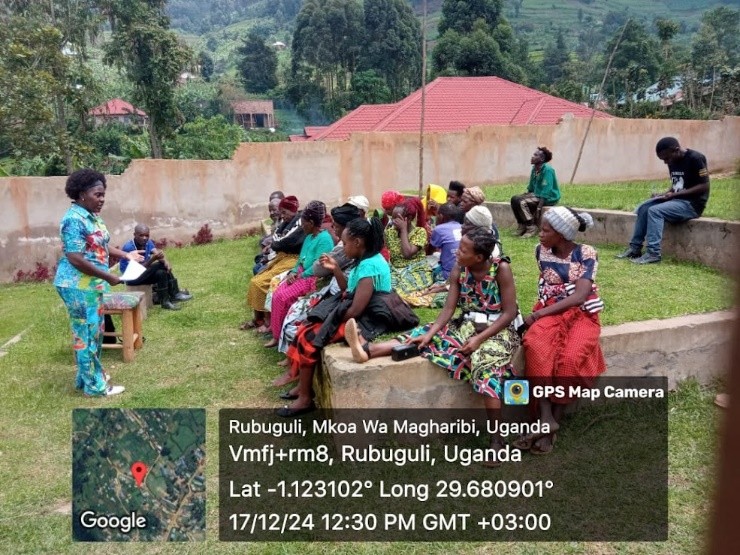
Our capacity-building work is grounded in the daily realities of the communities we serve. Instead of one-off trainings or classroom sessions, we offer practical, hands-on learning that helps people strengthen their forest stewardship, improve their livelihoods and deepen their connection to their environment. Every session is shaped by community priorities, cultural knowledge and the unique needs of Batwa families and local groups.
Indigenous Tree Propagation & Nursery Management CRU-Africa has built strong skills among Batwa and non-Batwa communities in indigenous tree propagation, seedling care and nursery management. Community members were trained in propagation techniques, nursery hygiene, watering schedules, and how to identify healthy seedlings. Through these trainings, they established and now manage thriving nursery beds in Nyanamo and Rubuguri. Together, they propagated over 4,600 seedlings and collected more than 1,000 wildlings from authorised areas of Bwindi, all screened and incubated by trained community teams. These nurseries now supply seedlings for restoration work across the region. These skills help communities run their own nurseries with confidence.
Forest Restoration Skills Our field-based sessions cover selective weeding, pruning, enrichment planting, pocket forest maintenance and monitoring. Community groups learn how to read forest conditions, make decisions about what to remove or protect, and care for restored areas throughout the year.
Sustainable Harvesting & Indigenous Knowledge We work with elders and women’s groups to document and teach traditional practices around herbal medicine, wild foods and careful harvesting. These sessions help younger community members reconnect with cultural knowledge while supporting healthier forest systems.
Climate-Smart Livelihoods Communities are introduced to practical ways of adapting to a changing climate—energy-saving stoves, rainwater harvesting, trenching in hilly gardens, soil conservation and improved food storage. These methods reduce pressure on forests while strengthening household resilience.
Community Leadership & Group Strengthening We build skills in leadership, teamwork, planning and self-driven stewardship. Local groups learn how to organise activities, follow up on restoration work and make decisions confidently. This improves accountability and ensures restoration continues beyond project timelines.
How We Teach Our model blends
Hands-on demonstrations
Follow-up visits and mentoring
Peer-to-peer learning
Practical field sessions
Community meetings and reflection circles
Impact So Far Through our trainings, community members, Batwa households and partner organisations are now leading nursery work, planting seasons, pocket forest maintenance and climate-smart practices. Many participants speak more confidently about their forests, understand how restoration supports their livelihoods and have become active stewards of the land.